
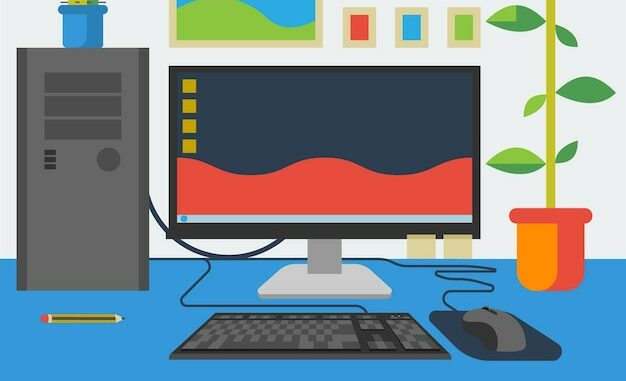
Computers have become a part of our daily life and are used in most fields, from academics to banking, from hospitals to logistics. Communication and data processing have been transformed by computers. The advantages of having a computer are numerous, ranging from performing straightforward tasks like arithmetic calculations to maintaining global connectivity. A computer is an electronic device capable of calculating and processing a tremendous amount of data in a short time. It does what the majority of humans are unable to do, and it does it quickly and effectively. Any information can be processed by computers using Machine Language, which is also known as Binary Language. However, a computer’s speed, capacity, and workload all depend on the size and specifications of the computer. For example, Supercomputers can process a large amount of data and information, as well as have a high capacity and workload as compared to a personal computer (PC).

Computers use Binary language in order to process a large amount of data, with the help of a combination of hardware and software.
A computer has multiple characteristics such as speed, accuracy, reliability, consistency, memory power, and so on. However, the characteristics of a computer depend on the specifications and types of devices.
For example, Handheld computers have less memory storage and speed, whereas supercomputers are extremely fast and can process up to a million pieces of dataA computer is an electronic device capable of calculating and processing a huge amount of information in a short span of time. The computer uses data as input, processes it in terms of binary language, and produces the data as output.
Basically, computers work with the help of the Central Processing Unit (CPU), which is also known as the brain of the computer. The central processing unit (CPU) is the computer’s primary brain and is in charge of directing all system operations, interpreting program instructions, and carrying out calculations. A computer is a broad term that is used to denote electronic devices that can perform high-profile tasks with speed and accuracy.
Desktop computers, laptop computers, handheld computers, supercomputers, tablet computers, and servers are all examples of computer types. It does what the majority of humans are unable to do, and it does it quickly and effectively. Computers use hardware and software to perform tasks such as calculations, manipulation, arithmetic, storage of data, and intelligence programs.
Hardware is the basic physical components, which include CPU, hard disk, ROM, graphics cards, etc., whereas software is the programs that are used to command the computer, such as Operating systems, applications, web browsers, etc.
Read on, to better understand the history of computer generation and development.
10 Key Features or Characteristics of Computer
The characteristics of a computer can be described as the features or qualities of the computer, such as Speed, Accuracy, Diligence, Reliability, Memory, Logical, Versatility, Automation, Consistency and Storage.
Computers work automatically without any hindrances, but they need human command to perform specific tasks.
What are these characteristics of a computer? And how many computer characteristics are there? Let’s discuss the ten computer characteristics that every child should know.The speed of the computer describes the number of operations a computer can perform in one second. It performs operations in microseconds and nanoseconds, which means they can process millions of instructions in seconds.
The speed of computers is expressed in terms of MegaHertz and GigaHertz. A computer can perform multiple tasks faster and accurately as compared to humans.
A computer is incredibly fast, but with ongoing technological advancement, what was superfast in the year 1997 may seem to possess a tortoise-like speed compared to modern-day computers, and the speed of computers will keep getting faster and faster steadily.
2. Accuracy
2. Accuracy
Computers perform error-free operations without any conflicts. Under normal circumstances, a computer can offer up to 100% error-free operations, and any errors found are usually the result of human intervention.
A computer can perform multiple tasks simultaneously without any errors. This became possible because of GIGO, which means Garbage In and Garbage Out.
If the data entered is incorrect or corrupted, then the output will also be incorrect.
3. Diligence
3. Diligence
Computers can perform repeated tasks consistently without getting bored or exhausted. We get tired and may get bored, but a computer doesn’t.
Computers don’t get bored or tired or lose concentration. It can work nonstop for hours without getting tired. It can run millions of operations in a single day and can execute simple operations as well as complicated tasks in a short span of time.
4. Reliability
4. Reliability
Computers are highly reliable and don’t make any errors, but a computer cannot be held responsible for any human errors.
A computer can process a large number of operations such as monetary transactions, data manipulation, multitasking, and major responses accurately and likelihood of mistakes are very low.
It will process the data accurately if you can provide it correctly. Feed the wrong data to the computer, and the results processed by it will also be inaccurate.
5. Memory
5. Memory
A computer’s capacity to store a large amount of data makes it optimal for information retrieval. The storage of computers is measured in terms of Bytes, Kilobytes, Megabytes, Gigabytes, Terabytes, etc.
The memory that the computers frequently use is RAM, an acronym for Random Access Memory.
To manage data frequently computers uses both primary memory and secondary memory such as hard disk, USB, TF Card, etc.
This type of memory is extremely fast with colossal bandwidth, which can feed the computer processor millions and billions of data to process.
6. Logical
6. Logical
Computers can perform a number of operations as per the command however, they can also perform a huge number of logical operations very quickly.
The logical characteristic of a computer allows the computer to solve problems related to reasoning, thinking, and learning. It’s now better defined as artificial intelligence, or AI for short.
7. Versatility
7. Versatility
Computers are highly versatile machines that can perform multiple tasks simultaneously and have an incredible ability to adjust and perform any necessary task.
Computer devices can perform repetitive tasks at multiple speeds as well as have the ability to store multiple data and information.
For example, it can perform word processing in one application and instantly switch to another for different requirements.
Understand top 15 basic computer skills every student must know.