
Introduction
As businesses embrace digital transformation, traditional IT infrastructures are struggling to keep up with rapidly changing market demands. Organizations need technology that is flexible, scalable, and capable of adapting to new opportunities without requiring complete system overhauls. This is where Composable IT and ecosystems come into play.
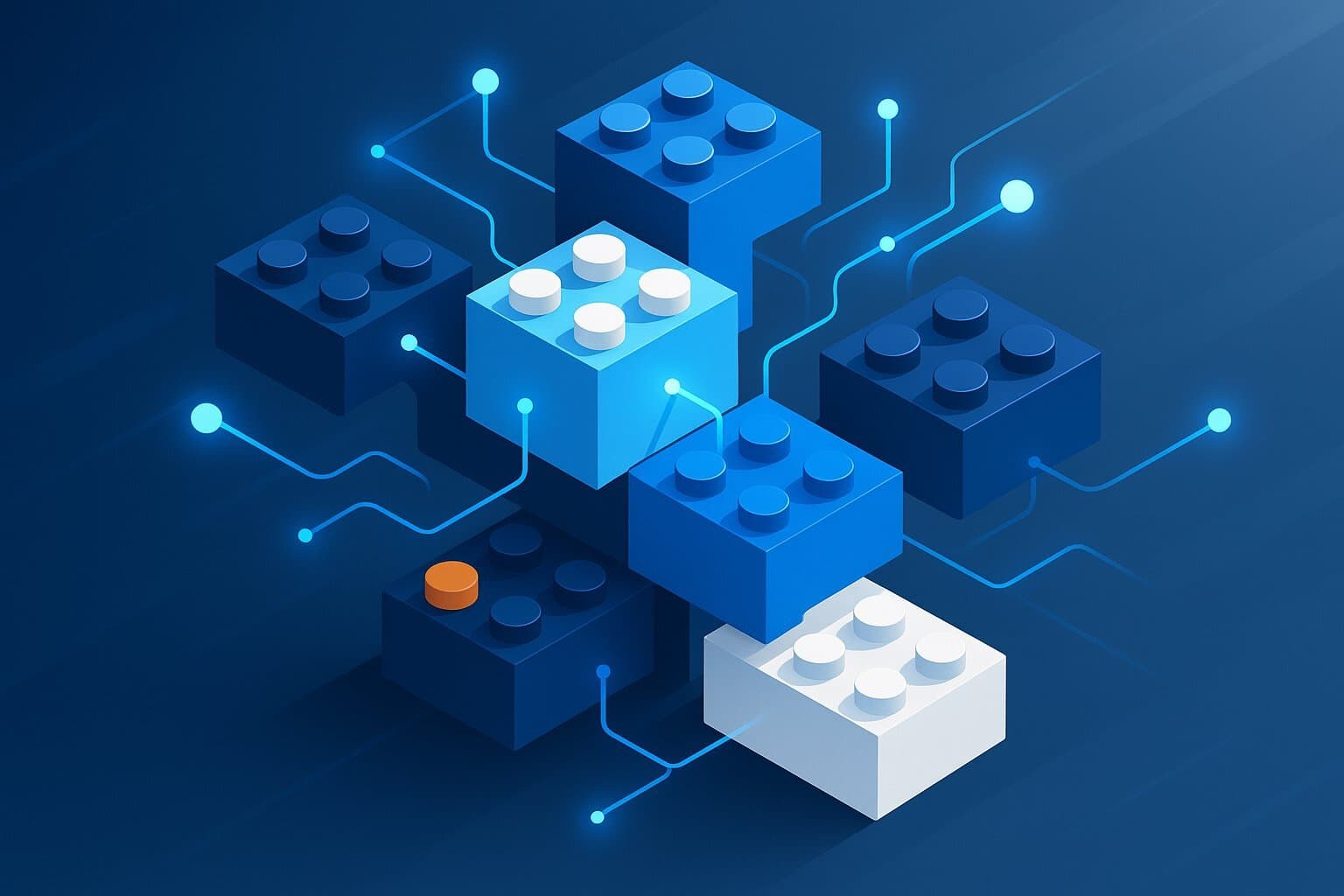
Composable IT is an innovative approach to enterprise technology that enables organizations to build, modify, and scale digital solutions using modular components. Rather than relying on rigid, monolithic systems, businesses can assemble applications, services, and infrastructure like building blocks. Combined with a connected ecosystem of partners, platforms, and cloud services, composable IT empowers organizations to innovate faster, improve operational efficiency, and respond quickly to evolving customer needs.
What Is Composable IT?
Composable IT refers to an architectural approach where technology resources are designed as reusable, interchangeable modules. These components can be combined and recombined to create new applications, workflows, or services without disrupting existing systems.
Instead of developing every solution from scratch, organizations can leverage APIs, microservices, cloud-native applications, and reusable software components to accelerate development and reduce costs.
The primary objective of composable IT is to make enterprise technology more adaptable, allowing businesses to evolve continuously as market conditions change.
Understanding Digital Ecosystems
A digital ecosystem is a network of interconnected organizations, technologies, and services that work together to deliver value. These ecosystems often include cloud providers, software vendors, technology partners, developers, customers, and third-party service providers.
Rather than operating in isolation, modern businesses collaborate across ecosystems to exchange data, integrate applications, and create seamless digital experiences.
Composable IT serves as the foundation that enables these ecosystems to function efficiently by supporting secure integrations and standardized communication between different platforms.
Why Businesses Are Adopting Composable IT
Organizations today face constant pressure to launch new products, improve customer experiences, and adapt to changing regulations. Traditional IT environments often slow innovation because modifying legacy systems can be expensive and time-consuming.
Composable IT addresses these challenges by providing:
- Greater flexibility
- Faster application development
- Easier system integration
- Reduced technology debt
- Improved scalability
- Enhanced operational efficiency
Businesses can introduce new services much faster while minimizing disruption to existing operations.
Key Components of Composable IT
Composable IT relies on several modern technologies that work together to create flexible digital environments.
APIs (Application Programming Interfaces)
APIs enable different software systems to communicate and exchange information securely. They allow businesses to integrate third-party services without rebuilding applications from scratch.
Microservices
Microservices break large applications into smaller, independent services that can be updated individually. This approach improves reliability, scalability, and development speed.
Cloud Computing
Cloud platforms provide on-demand infrastructure and computing resources, allowing organizations to scale applications as business requirements evolve.
Containers and Kubernetes
Container technologies package applications with all necessary dependencies, making deployment faster and more consistent across multiple environments.
Kubernetes automates container deployment, scaling, and management, simplifying application operations.
Benefits of Composable IT Ecosystems
Faster Innovation
Businesses can rapidly launch new products by combining existing technology components rather than developing entirely new systems.
Development teams spend less time rebuilding common functions and more time creating innovative features that differentiate the business.
Improved Scalability
Composable architectures allow organizations to expand individual services without affecting the entire system.
As customer demand increases, businesses can allocate additional computing resources only where needed, reducing infrastructure costs.
Better Customer Experiences
Modern customers expect personalized, seamless digital interactions across websites, mobile apps, and customer service channels.
Composable ecosystems enable businesses to integrate customer data from multiple platforms, creating consistent and engaging experiences.
Reduced Costs
Reusable technology components reduce software development expenses while simplifying maintenance and upgrades.
Organizations also avoid costly large-scale system replacements by updating individual modules instead of entire applications.
Industry Applications
Composable IT benefits organizations across numerous industries.
Financial Services
Banks use composable platforms to integrate payment systems, fraud detection, digital banking, and customer relationship management while maintaining regulatory compliance.
Healthcare
Hospitals connect electronic health records, telemedicine platforms, appointment scheduling, and diagnostic systems through modular digital architectures.
Retail
Retailers integrate inventory management, e-commerce platforms, customer loyalty programs, payment gateways, and logistics systems into unified customer experiences.
Manufacturing
Manufacturers connect production equipment, supply chain software, IoT sensors, predictive maintenance systems, and analytics platforms to improve operational efficiency.
Challenges of Composable IT
Although composable IT offers significant advantages, successful implementation requires careful planning.
Organizations must address challenges such as:
- Data security
- API governance
- System interoperability
- Change management
- Skills development
- Vendor compatibility
Strong cybersecurity practices and standardized integration strategies are essential to maintaining reliable operations.
The Role of Artificial Intelligence
Artificial intelligence is becoming an integral part of composable ecosystems. AI-powered automation can optimize workflows, predict system failures, enhance customer support through intelligent chatbots, and improve business decision-making using real-time analytics.
As AI technologies continue to mature, they will increasingly operate as modular services that organizations can easily integrate into existing composable architectures.
The Future of Composable IT and Ecosystems
The future of enterprise technology is moving toward increasingly connected and modular digital environments. Organizations will continue adopting cloud-native architectures, low-code development platforms, edge computing, and AI-driven automation to remain competitive.
Composable IT will enable businesses to adapt more quickly to technological advancements while reducing complexity and accelerating innovation. Digital ecosystems will become even more interconnected, allowing companies to collaborate seamlessly across industries and global markets.
Businesses that invest in composable architectures today will be better positioned to embrace future technologies without costly infrastructure redesigns.
Conclusion
Composable IT and digital ecosystems are reshaping how modern enterprises build, manage, and scale their technology environments. By adopting modular architectures, reusable services, cloud-native platforms, and integrated ecosystems, organizations gain the flexibility needed to innovate faster and respond effectively to changing market demands.
As digital transformation continues to accelerate, composable IT will remain a critical strategy for organizations seeking greater agility, operational efficiency, and long-term business resilience. Companies that embrace this modern approach will be well-equipped to thrive in an increasingly connected and technology-driven world.